


When browsing the social media pages of many B2B companies, you'll often see a steady stream of neatly organized updates: detailed product specifications, award announcements, trade show highlights, and holiday greeting visuals. There is no shortage of content, and the design is often polished—yet engagement remains low, and inquiries are rare.
At the core of this issue lies a fundamental misconception: companies treat overseas social media as a"product catalog"or"corporate news feed,"rather than a tool to support customer decision-making. A catalog answers"what we offer,"while a decision-support tool answers"what the customer cares about."When content fails to align with how buyers evaluate suppliers, social media becomes a self-referential exercise with little business impact.
The true value of overseas social media content lies not in how many products you present, but in whether you answer the questions your customers are already asking.
I. Perspective Misalignment: Why Companies Talk About What Customers Don't Care About
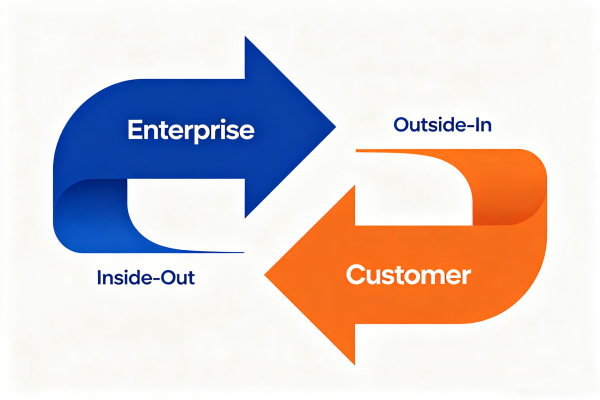
Many companies are not lacking effort—they are facing a cognitive misalignment. This gap results in content that exists on a completely different axis from the information buyers need during decision-making.
▶ (1) Thinking Model Gap: Inside-Out vs Outside-In
Companies tend to think in an inside-out way:
What technologies do we have? What awards have we won? What products have we launched? This mindset is rooted in internal achievements and resources.
Customers, however, think outside-in:
Can this solve my problem? Is choosing you low-risk? Do you understand my industry? This mindset is driven by business pain points and decision security.
When internal logic is used to communicate with external buyers, information inevitably loses relevance.
▶ (2) Language Gap: Features vs Benefits
Corporate content is often filled with features and specifications—for example,"precision reaches 0.01mm"or"API integration supported."While accurate, these are not what ultimately drives decisions.
Customers care about outcomes and business value:
How much scrap can this reduce? How much time can this save?
If content stays at the feature level, customers must translate it into value themselves. This increases cognitive effort and lowers conversion likelihood.
▶ (3) Objective Gap: Showcasing vs Validation
Companies publish content to demonstrate capability or maintain visibility.
Customers consume content to validate decisions and reduce risk.
When content is created for showcasing, it becomes one-way broadcasting. When it is created for validation, it becomes a two-way trust-building process. This mismatch leads to a common disconnect: companies feel"we've posted so much,"while customers feel"this is just advertising."
💡 Landelion Insight:Shifting content perspective is the key step from being a"seller"to becoming a"trusted advisor."
II. Buyer Evaluation: The Three Questions That Actually Matter
To realign content strategy, companies must first understand what buyers are trying to validate. In long-cycle B2B purchasing, social media content is essentially used to answer three critical questions:
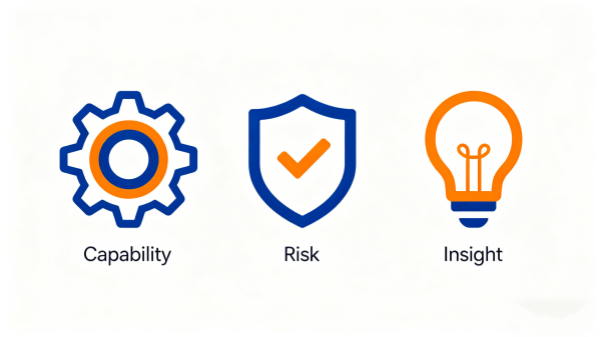
▶ (1) Capability Validation: Can You Solve My Specific Problem?
🗣️Buyer mindset: "Don't just tell me what you sell—show me what problems you've solved."
Customers are not interested in generic product brochures; they want solutions tied to real-world scenarios. For instance, a detailed technical breakdown addressing equipment stability in high-temperature environments is far more persuasive than a trade show snapshot.
⚠️Common mistake: Talking about what products can do, instead of what problems have been solved for customers.
▶ (2) Risk Validation: Is It Safe to Choose You?
🗣️Buyer mindset: "Don't just show certificates—show how you deliver and support."
Certifications are only entry requirements, not trust guarantees. Customers care more about delivery processes, after-sales responsiveness, compliance practices, and real client experiences.
⚠️Common mistake: Highlighting awards while ignoring service execution details.
▶ (3) Cognitive Validation: Do You Understand My Industry?
🗣️Buyer mindset: "Don't just say you're global—show me how you see my industry."
Customers prefer partners, not just vendors. Industry insights, regulatory analysis, and application-specific perspectives demonstrate deeper understanding and strategic alignment.
⚠️Common mistake: Posting company updates without providing industry-level thinking.
💡 Landelion Insight: Customers are not buying products—they are buyingcertainty about outcomes.
III. The Landelion Approach: Restructuring Content to Support Buyer Decisions
Shifting perspective is not just about rewriting copy—it requires a systematic restructuring of content strategy. In Landelion's SMM framework, content is treated as a sales enablement tool, designed to support customer evaluation, improve lead quality, and facilitate conversion.
▶ (1) Content Planning: From Product Launches to Problem-Solving
❌Traditional approach: Content calendars built around product releases.
✅Landelion approach: Content structured around real customer challenges.
Instead of"New Model Launch,"we develop topics such as:
"How to Solve Thermal Deformation in High-Temperature Machining."
🛠️Business value: Customers immediately see relevance to their own operations, increasing engagement and trust.
▶ (2) Lead Capture: From One-Way Messaging to Two-Way Validation
❌Traditional approach: Ending posts with generic website links.
✅Landelion approach: Embedding verifiable proof and targeted conversion triggers.
For example, instead of simply announcing an award, we explain why customers chose the solution, supported by testimonials and project insights. At the same time, we introduce targeted CTAs such as"Download industry-specific case studies"to filter high-intent leads.
🛠️Business value:Enhances credibility while generating more qualified leads for sales teams.
▶ (3) Sales Enablement: From Raw Leads to Context-Rich Opportunities
❌Traditional approach: Delivering only contact details to sales teams.
✅Landelion approach: Tagging leads based on content interaction context.
For example:
Whitepaper downloads → Technical evaluation stage
Cost guides → Budget approval stage
Each lead is delivered with content interaction data, giving sales teams immediate context for follow-up.
🛠️Business value: Enables more precise communication and improves conversion rates.
💡 Landelion Insight: The best content makes customers feelunderstood—and makes leadsactionable for sales.
IV. Three Practical Diagnostics for Immediate Improvement
Companies do not need to rebuild everything from scratch. Instead, start with these three business-level diagnostics:
▶ (1) Content–Sales Alignment Check
Ask your sales team:
"Have any customers mentioned your social media content when reaching out in the past three months?"
If the answer is no, your content is not influencing decision-making.
▶ (2) Lead Intent Clarity Check
Review recent leads.
Does sales still need to ask,"Which product are you interested in?"
If yes, your content is not effectively pre-qualifying intent.
▶ (3) Risk Reduction Check
Analyze your last 10 posts.
How many focus on showcasing company strength, and how many demonstrate delivery reliability?
If the former dominates, your content is not reducing perceived risk.
💡 Landelion Insight: Real improvement starts with recognizing whether content is actually driving business outcomes.
Conclusion: Turn Content into a Decision-Making Asset
The core of overseas social media is no longer about capturing attention—it is about building trust. When content shifts from self-promotion to decision support, social media becomes a true acquisition channel.
For B2B companies, the real investment is not in exposure alone, but in making content a reliable reference point during supplier evaluation. Only when customers find answers within your content does the journey from awareness to trust truly take shape.
📩 Contact us | Learn more about global marketing solutions
💬 Add us on WeChat to schedule a content strategy consultation.
📚 Further Reading
How Social Media Becomes a Trust Infrastructure for Manufacturing Brands
From"Posting"to"Being Remembered": Social Media Strategy for Tech Companies