


When you browse the LinkedIn pages of many B2B manufacturing companies, you often see a steady stream of neat, well-formatted updates: exhibition photos, new product specifications, award announcements, and holiday greetings. The content is not scarce, and the presentation is often acceptable, yet engagement remains limited and inquiries are even rarer.
Behind this pattern lies a core misconception: many companies treat overseas social media as a public notice board, rather than a customer decision-making tool. A notice board is meant for self-expression—it tells the world what the company has done. A decision-making tool, by contrast, helps customers evaluate—it shows them what problems the company can solve.
For B2B manufacturers, the real value of overseas social media lies not in posting frequency itself, but in whether it helps potential customers understand the company's capabilities more quickly, reduce concerns about cooperation, and build early-stage trust.
I. Misconception Analysis: Why Company News Cannot Replace Customer Decision Content
Many companies assume that showcasing strength—through exhibitions, awards, or capacity expansion—naturally builds trust. But in B2B procurement logic, this type of content usually functions as background information rather than the core basis for decision-making.
▶ 1. Company News Says "What We Did"
Exhibition photos, award announcements, and executive visits all center on the company itself. They can serve as brand endorsement, but they rarely answer the questions buyers care about most: do you truly understand my needs, and can you solve my problems?
For procurement teams, this kind of content is usually supportive rather than decisive.
▶ 2. Product Updates Say "What the Product Is"
Simply listing product parameters and specifications creates "manual-style" content. Buyers do not need the parameters alone—they need to understand what those parameters mean. For example, how much can that level of precision reduce scrap rates? How much can that speed improve capacity?
Only when specifications are translated into business value does the content enter the buyer's decision framework.
▶ 3. Frequent Updates Say "We're Always Posting"
Some companies publish fragmented updates frequently just to stay active, but without any thematic structure. This makes the account feel scattered, and customers struggle to identify the company's core strengths or remember how it differs from other suppliers.
From a content strategy perspective, the issue is not that there are too many updates, but that there is no content structure built around customer decision-making.
💡 Landelion Insight: Buyers do not purchase technical parameters; they purchase the business value behind those parameters. What they see is not just company activity, but whether that information is enough to support a decision.
II. What Customers Actually Want to See on Overseas Social Media
B2B procurement is a high-risk, long-cycle decision process. When customers look for content on social media, they are essentially conducting risk validation and value assessment. What they truly want to see usually revolves around three key questions:
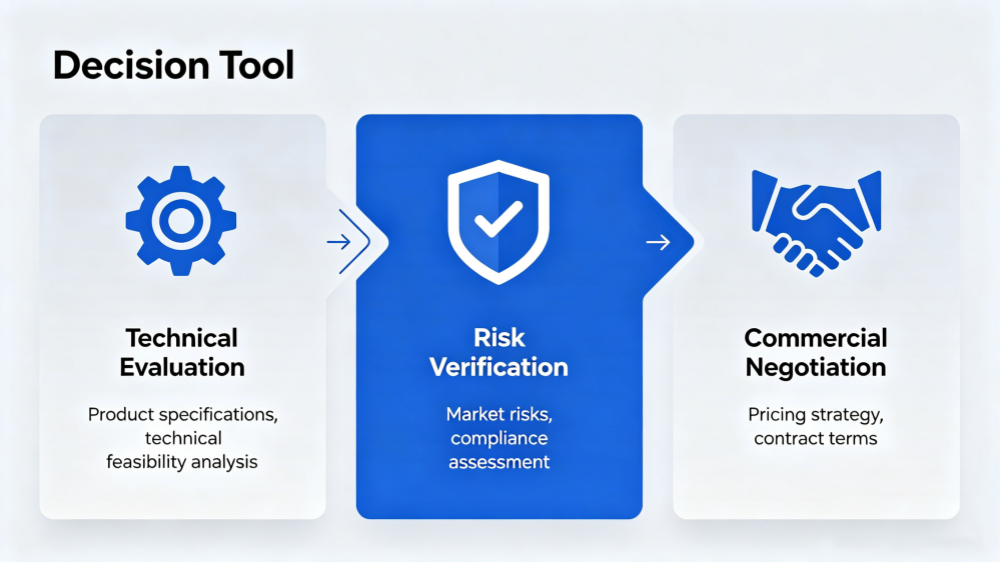
▶ 1. Can You Solve My Specific Problem? (Capability Validation)
Customers do not care how many machines you have; they care whether you have dealt with similar process challenges. For example, when facing the issue of stability in high-temperature environments, a detailed technical solution article is far more persuasive than a trade show photo.
For manufacturing buyers, solution-oriented content built around real pain points is almost always more convincing than a group of event photos.
▶ 2. Is Choosing You Risky? (Trust Validation)
Customers worry about unstable delivery, slow after-sales response, and execution risk. Case studies, customer testimonials, end-to-end service records, compliance information, and after-sales support materials can all reduce perceived risk.
That is why case studies, project delivery records, compliance documentation, and service capability content often do far more to reduce concern than corporate honor or award announcements.
▶ 3. Do You Understand My Industry? (Cognitive Validation)
Customers want suppliers to act as partners, not just sellers. Industry trend analysis, compliance interpretation, and application-specific insights help companies establish a deeper level of professional trust: you are not simply selling equipment or solutions—you understand the commercial context your customers operate in.
💡 Landelion Insight: The essence of overseas social media content is to reduce decision risk and cognitive cost for the customer.
III. How to Shift from a "Notice Board" to a "Customer Decision Tool"
If a company wants to turn its account from a notice board into a customer decision tool, its content structure must be redesigned. The core principle is simple: every piece of content should serve as one piece of evidence in the customer's supplier evaluation process.
▶ 1. Shift the Content Goal: From "Showing" to "Supporting"
Instead of asking, "What do we want to post?", ask, "What information does the customer need at this stage to make a decision?" For example, during supplier selection, provide comparison guides; during evaluation, provide case data.
▶ 2. Rebuild the Content Mix: Create a Value-Oriented Content Matrix
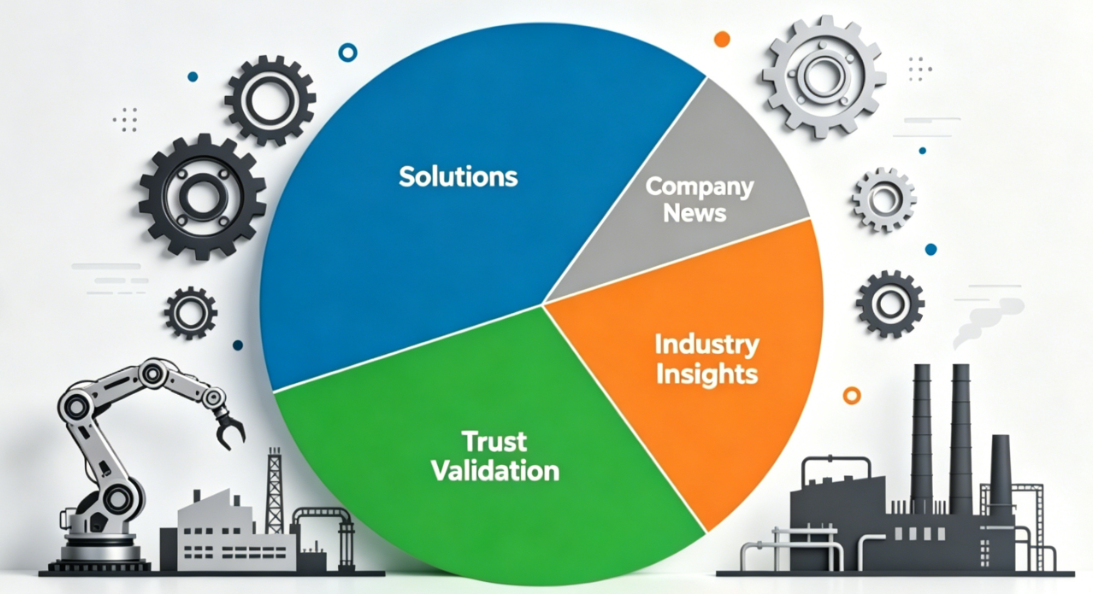
A practical way forward is to reduce purely news-based content and increase high-value decision-support content. A balanced structure may look like this:
40% Solution and pain-point response content: technical explanations and application guides directly tied to customer business scenarios
30% Trust-building and case-based content: customer testimonials, project delivery records, compliance certifications
20% Industry insight and educational content: trend analysis, white paper summaries, compliance interpretation
10% Company updates: exhibitions, awards, team culture, used as brand support rather than the main content pillar
▶ 3. Upgrade Content Format: From "Images and Text" to "Evidence Chains"
A single image is often not enough to carry complex industrial information. By combining video demonstrations, data charts, and downloadable white papers, companies can create a more complete chain of evidence that allows customers to verify their capabilities from multiple angles.
💡 Landelion Insight: A strong overseas social media account is not just a channel for brand messaging; it should function as a pre-decision support tool within the customer's procurement journey.
IV. Three Optimization Actions Companies Can Take First
Companies do not need to rebuild their accounts from scratch. In most cases, a careful review and adjustment of the content structure is enough to improve lead generation efficiency significantly.
▶ 1. Audit Existing Content
Review the posts published over the past three months and ask:
Is this content talking about the company, or responding to a customer problem?
Does it help customers evaluate capability, risk, or industry understanding?
Does it encourage customers to learn more, or simply get consumed and forgotten?
If most of the content remains at the level of "company updates," the account is still operating under the logic of a notice board.
▶ 2. Build a Content Calendar
Based on the content matrix above, plan the topics for the coming month and define the role of each type of content. For example:
content that explains solutions
content that builds trust
content that demonstrates industry understanding
content that supports brand positioning
Only then can the account gradually evolve into a structured content system, rather than a collection of fragmented updates.
▶ 3. Improve Content Hooks
When publishing news-style content, try linking it to customer value. For example, when posting exhibition news, do not just share photos; explain what technical problems were addressed at the event and what customer concerns were discussed. In this way, company updates stop being mere updates and enter a context the customer can actually understand and evaluate.
💡 Landelion Insight: Optimizing content structure is the key step in moving overseas social media operations from rough execution to refined strategy.
Conclusion: Turn Content into a Carrier of Trust
The next phase of overseas social media is no longer about posting frequency; it is about how well content supports customer decisions.
For B2B manufacturing companies, the most worthwhile investment in overseas social media is not just exposure, but ensuring that content becomes a real reference point when customers evaluate suppliers. Only when content structure is designed around customer judgment can the path from awareness to trust truly open up.
Take Action: Diagnose Your Overseas Social Media Content Structure
Is your overseas social media content truly helping customers make decisions?
Landelion provides a content structure diagnostic program for B2B global social media, evaluating performance across three dimensions—content mix, value density, and decision support—to help identify the hidden content gaps that may be hurting conversion.
📩 Contact us | Learn more about global marketing services
💬 Add us on WeChat to book a content structure assessment.
📚 Further Reading
How Overseas Social Media Becomes the Trust Infrastructure for Manufacturing Companies Going Global
Overseas Social Media for Tech Manufacturers: How to Move from “Being Seen” to “Being Remembered”