


In the wave of manufacturing globalization, a common belief persists: products are hard currency—if quality is strong and translation is accurate, customers will come naturally.
However, through years of experience in global branding and cross-border communication, Landelion has observed a far more complex reality. Countless Chinese manufacturers with world-class R&D capabilities invest heavily in multilingual websites, yet remain like isolated signals in the deep sea—rarely receiving meaningful responses.
So where does the problem lie?
The Starting Point: Why Do “Accurately Translated” Quotations Fail to Generate Leads?
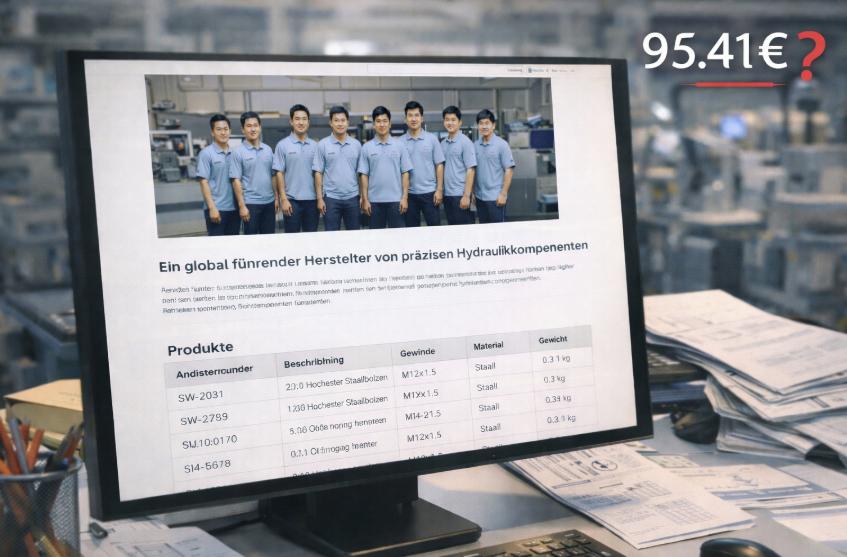
Last spring, a leading domestic precision hydraulics manufacturer approached us. Their technology dominated the Asian market and even served multiple Fortune Global 500 clients as an OEM. To formally enter the European high-end market, they commissioned professional agencies to translate over 200 pages of technical manuals and website content into German and English.
The company executive asked anxiously: “Our translation is extremely precise—even every bolt specification is accurate. Why aren’t German buyers even submitting inquiries after visiting our website?”
The issue became immediately clear upon reviewing the website: instead of solutions, the first visual was a corporate group photo under motivational banners; the German product pages resembled cold parts lists. This is not just a language issue—it is a classic case of an “expression gap.”
Layer One: From Literal Translation to “Industrial Resonance”
At Landelion, we believe language carries nuance—especially industrial language. In the AI-driven search era, “industrial resonance” means your content is recognized as a credible professional source.
From literal translation to contextual adaptation: True localization goes beyond translating terms like “ergonomics”—it requires understanding how North American executives or German engineers interpret “support” and comfort.
Replace adjectives with data and certification: Instead of claiming “industry-leading,” specify compliance with international standards.
Case Insight
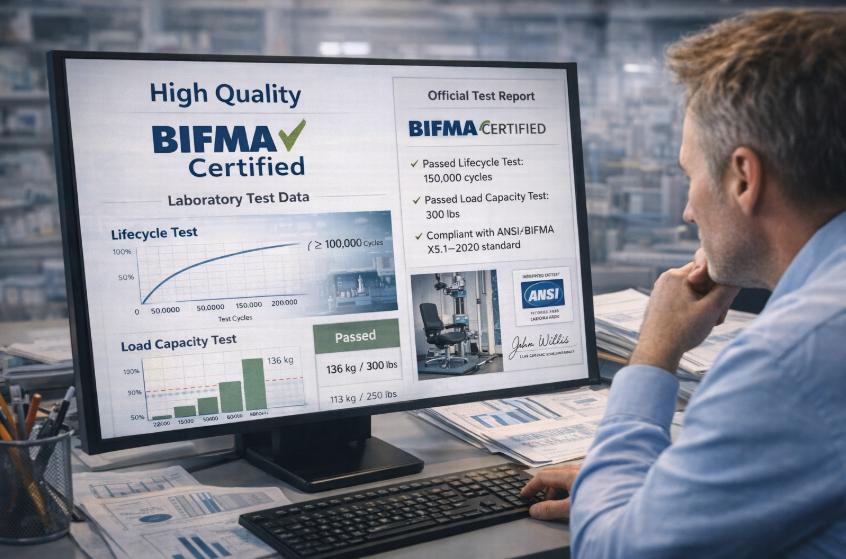
When a U.S. buyer sees “High Quality,” it carries little weight. But when your website clearly shows compliance with BIFMA standards, accompanied by laboratory test data, true “resonance” begins.
Layer Two: Restructuring Logic—From “What We Want to Say” to “What AI and Buyers Seek”
Chinese manufacturers often adopt an inside-out narrative: factory size, employee count, corporate honors. The global market, however, operates on an outside-in logic: What problems can you solve? How do you reduce procurement risk? How do you prove long-term reliability?
In one medical device globalization project, we recommended replacing the homepage “Chairman’s Message” with a global after-sales response time chart—because for overseas hospitals, maintainability outweighs factory scale. This structural shift fundamentally rebuilds trust.
| Expression Mode | Typical CN Logic | Global Buyer Logic | Reconstruction Direction |
| Homepage Priority | Factory size, headcount, awards | Problem-solving, risk reduction | Highlight solutions, compliance, service |
| Trust Building | Self-claimed narratives | Verifiable proof, reliability | Structured answers to key concerns |
Layer Three: Infusing “Brand Warmth” and ESG Value into Industrial Narratives
Manufacturing communication often feels cold—machines, components, codes, standards. Yet in practice, “warm professionalism” is the ultimate differentiator for global brands.
Instead of dry corporate language, effective storytelling highlights human impact—such as how products contribute to communities or sustainability efforts.
Craftsmanship: Showcase experienced technicians and their dedication.
Extreme testing: Document rigorous product testing processes.
ESG practices: Transparently communicate sustainability efforts.
These details transform perception—from a low-cost supplier to a value-driven long-term partner.
Landelion Insight
When industrial brands only present manufacturing capability, they appear as suppliers. When they demonstrate responsibility, methodology, and long-term thinking, they become partners.

Self-Audit Checklist for Globalizing Manufacturers
Prioritize compliance and solutions
Make compliance and industry solutions prominent.Evaluate your keywords
Are you using Chinglish, or targeting phrases like ISO certified precision engineering?Upgrade visual professionalism
Use clean, high-resolution production visuals instead of generic factory shots.Ask one question
Does your website show respect for the local market?
Conclusion: Translation Is Not the Goal—Reconstructing Communication Is
Translation is never the end goal—deep cross-cultural communication is.
In global competition, a website is no longer a showcase of resources—it is a bridge connecting different business systems and cultures. Translation alone is insufficient. What is required is a fundamental reconstruction of expression.
Take Action: Make Your Brand Visible in the AI Era
Want to understand how your website performs in the eyes of global buyers? Contact Landelion. We will analyze your “expression gap” across language accuracy, structural logic, and trust assets.
📩 Contact Us | Explore Our Services
💬 Add WeChat for tailored solutions
📚 Further Reading
Global Manufacturing Brands: How to Evolve from Website Presence to AI Discoverability
Manufacturing Distributor Enablement: How to Build Value-Driven Global Sales Channels