


In the process of global expansion, language support is often fragmented into one-off purchases. The same core concept may be expressed differently across regions, projects, or communication contexts—subtle variations that can quickly become the starting point for overseas clients to question a company's internal consistency.
Many organizations still treat interpretation and translation as temporary needs—simply "finding someone to translate." What is often overlooked is that in high-stakes global business environments, language service providers are not just vendors, but guardians of a company's consistency in global expression.
At scale, language services are no longer transactional tools. They become relational assets—accumulated over time—and form a critical part of a company's global trust infrastructure.

I. The Core Challenge: Three Hidden Risks of Fragmented Language Services
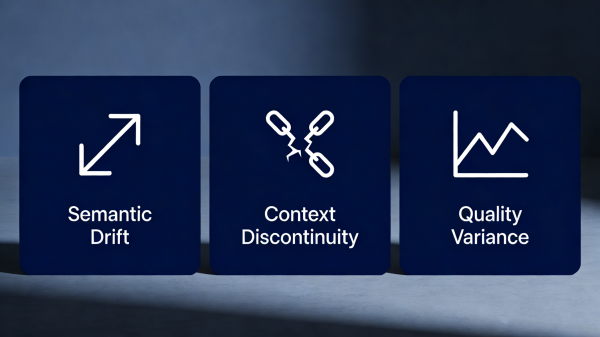
Under a traditional procurement model, companies source language services on a per-project basis. While this may work in isolated scenarios, it quickly reveals structural weaknesses when applied across regions and over time. This transactional approach introduces three major hidden risks:
1. Semantic Drift
Different vendors and interpreters often interpret the same technical terminology differently. Over time, this leads to subtle shifts in how a company presents its core concepts externally, causing ambiguity in product positioning and weakening customer understanding.
2. Context Discontinuity
Interpreters engaged on a one-off basis lack familiarity with the company's negotiation history, executive communication style, and industry context. Each interaction effectively starts from zero, preventing continuity and increasing the need for repeated explanations.
3. Quality Variance
Without a unified quality control system, service quality becomes highly dependent on individual interpreters. Inconsistent delivery across different engagements may lead clients to question the stability of the company's broader operational capabilities.
💡 Landelion Insight: One-off delivery solves immediate communication needs; long-term support builds relationship continuity.
II. The Three Pillars of Enterprise-Level Relational Language Services
To transition from transactional procurement to relationship-based support, companies must build a language service system grounded in long-term thinking. Landelion's model reflects this shift—from providing manpower to delivering communication certainty.
1. Global Network Synergy
Enterprise-grade language services require seamless coordination across regions. Regardless of location, interpreters must operate with access to the same terminology base and company knowledge. This ensures that clients consistently hear the same "corporate voice," supported by unified quality standards and global resource allocation.
2. Long-Term Expression Support
Language services should not end with a project. Through ongoing collaboration, service teams accumulate knowledge of a company's communication style, executive preferences, and industry nuances. This familiarity reduces friction and enhances efficiency, transforming interpreters from external vendors into informed communication partners.
3. Cross-Cultural Communication Alignment
Translation is not merely linguistic—it is cultural. Long-term partners can anticipate cultural risks and help adapt messaging strategies to ensure accurate reception in different markets. For example, certain technical statements may be delivered directly in North America but require more precision and nuance in European contexts. Experienced teams recognize and adjust for these differences.
| Dimension | Transactional Model | Relational Model | Business Value |
|---|---|---|---|
| Objective | Complete individual tasks | Ensure long-term consistency | Reduce global cognitive friction |
| Terminology | Temporary glossaries | Dynamic enterprise terminology system | Eliminate ambiguity |
| Team Structure | Random interpreter assignment | Dedicated long-term team | Build contextual alignment |
| Collaboration | Price-driven procurement | Strategic partnership | Improve communication efficiency |
This distinction is not merely operational—it reflects a deeper level of strategic maturity. In global markets, language consistency directly signals organizational discipline. When clients perceive precision in communication, they are more likely to assume precision in product quality as well.
III. Measuring Effectiveness: From Delivery Metrics to Communication Outcomes
If companies move away from one-off procurement, how should they evaluate the value of long-term language services? The answer lies in shifting from delivery-based metrics to business impact indicators.
1. Decision Cycle Compression
Evaluate whether clear and accurate language support shortens the client decision-making process. When communication barriers are removed, the time from initial engagement to contract signing should decrease significantly.
2. Key Information Integrity
Measure how well critical technical data and strategic intent are preserved across languages. Post-meeting validation and client feedback can help confirm that key information remains intact. High integrity directly correlates with higher trust.
3. Brand Voice Accumulation
Assess whether each interaction strengthens a consistent global brand voice. Over time, communication should become more stable and recognizable, rather than fragmented across projects. This accumulated clarity is a core component of brand equity.
💡 Landelion Insight: If a service cannot be measured, it will inevitably revert to price competition.
IV. Implementation Path: From Vendor-Based Procurement to Strategic Partnership
Transitioning from transactional services to relational language support does not require rebuilding existing processes—it requires introducing governance and structure.
Step 1: Audit Existing Language Service Providers
Review language service engagements over the past two years. Identify frequently used vendors, key service scenarios, and existing gaps. Build a structured evaluation framework to assess current performance.
Step 2: Establish Terminology and Context Systems
Implement terminology management tools and integrate them into service workflows. Ensure all projects undergo terminology validation before execution, and assign a language owner with final approval authority.
Step 3: Formalize Long-Term Partnership Agreements
Select providers with global coordination capabilities. Shift evaluation criteria from cost per unit to consistency rate and responsiveness. Conduct regular performance reviews aligned with business evolution.
💡 Landelion Insight: Upgrading language services is fundamentally about managing communication risk.
Conclusion: Relational Language Services as Trust Infrastructure
Transactional delivery provides short-term convenience; relational support builds long-term trust. As companies enter global competition, language is no longer a support function—it becomes a visible indicator of organizational maturity.
Take Action: Build Your Global Communication Trust System
If you want to assess whether your current language support can sustain global growth, Landelion offers a comprehensive diagnostic program. We evaluate your communication system across terminology consistency, cross-cultural alignment, and global resource coordination—helping you identify hidden gaps that directly impact business outcomes.
📩 Contact us | Explore enterprise language service solutions
💬 Add us on WeChat to download the "Website Messaging Self-Assessment Checklist" or book a 20-minute consultation for tailored recommendations
📚 Further Reading
Multilingual Content Governance: Why Translation Must Evolve into Global Expression Governance
Risk-Based AI Translation for Technical Documentation | Landelion